BREAKING: Greta Thunberg kräver en oberoende utredning kring uppgifter om ett påstått dolt maktnätverk med kopplingar till Ulf Kristerssons politiska system.

BREAKING: Greta Thunberg Calls for an Independent Investigation Into Alleged
Hidden Power Networks Connected to Ulf Kristerson’s Political System
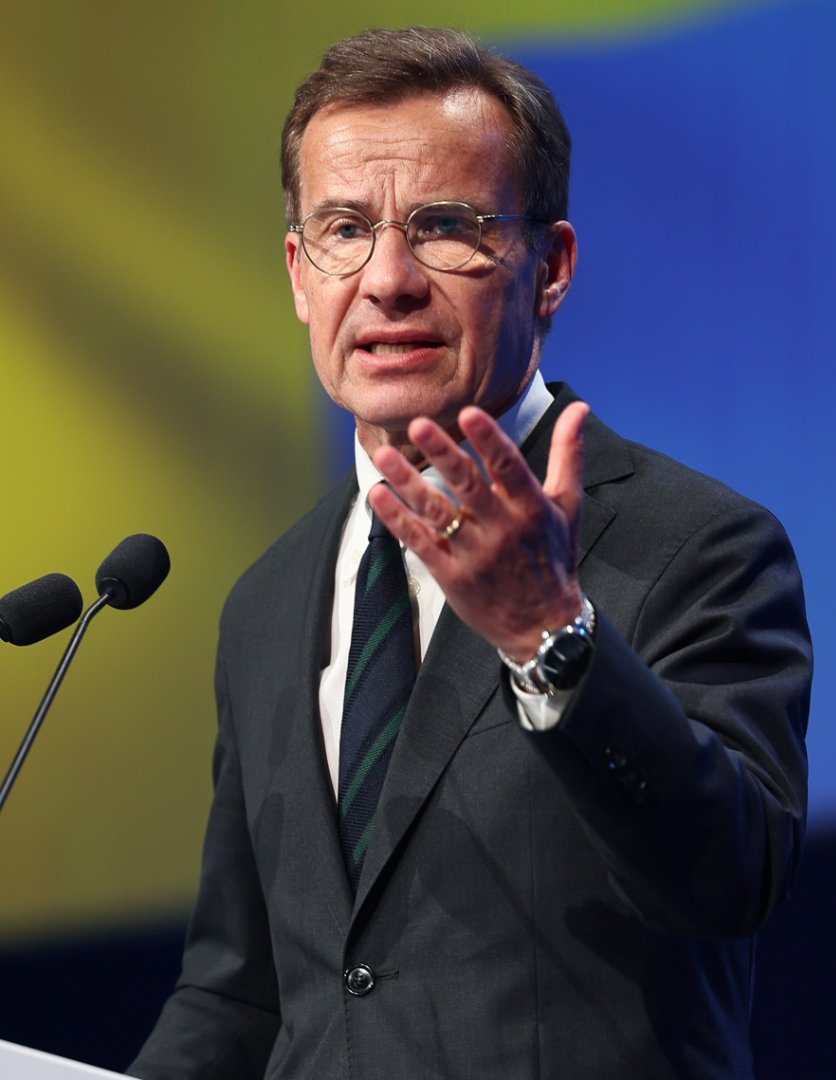
Greta Thunberg has once again placed herself at the center of a growing national debate, calling for an independent investigation into what she described as alleged hidden networks of influence connected to the political system sumounding Swedish Prime Minister Ulf Kristersson.
The climate activist, known worldwide for confronting political leaders over inaction, hypocrisy, and empty promises, warned that Swedish citizens deserve full transparency if powerful interests are operating behind the scenes and shaping national decisions without public oversight.
According to Thunberg, the issue is not limited to climate policy.
It is about democracy, accountability, and whether elected leaders are truly serving the public or responding to pressure from private networks, corporate interests, and political actors working outside the view of ordinary citizens.
“A toxic underground network of power is operating inside the country we love,”
Thunberg stated.

*If what is being reported proves to be true, it would not only stand against democratic values, but it would also represent a threat to the rule of law.
Swedish citizens have the right to know the full truth.”
Her statement immediately sparked intense reactions across social media.
Supporters praised her for raising a question many young voters, climate activists, and frustrated citizens have asked for years: who really influences the decisions that affect the future of Sweden?
For Thunberg’s supporters, the demand for an investigation is not just another political accusation.
It is a call for sunlight in a system they believe has become too comfortable with closed-door meetings, lobbying pressure, and policies that protect powerful interests while ordinary citizens are told to be patient.
At the center of the controversy are allegations involving hidden structures of influence, unclear decision-making mechanisms, and attempts, according to some observers, to shape Swedish political life outside the control and supervision of public opinion.
These concerns have become especially sensitive at a time when climate policy, energy strategy, migration, security, and economic priorities are being fiercely debated.
“Ulf Kristersson may appear today before citizens as a democratically elected leader, but many believe that the power system built around his government has taken deep root inside the country’s institutions,” Thunberg said.
The remark quickly became one of the most widely shared parts of her statement.
To many of her followers, it reflected a broader frustration with a political class that speaks the language of responsibility while continuing to delay action on the climate
crisis.
“If there is something that needs to be clarified, then we must go all the way and uncover the truth,” Thunberg added
That line resonated strongly among activists who believe Sweden’s image as a transparent democracy must be matched by real accountability.
They argue that if the govemment has nothing to hide, then an independent investigation should not be feared.

Instead, it should be welcomed as a way to restore public confidence.
Thunberg’s call also connects to her long-standing criticism of political greenwashing.
For years, she has accused governments of praising climate goals in public while approving policies that fail to match the scale of the emergency.
Her supporters say the same pattern may apply to other areas of govermance: polished public messaging on one side, hidden pressure and private influence on the other.
Critics, however, argue that any claims about hidden power networks must be handled carefully and supported by evidence.
They warn that broad allegations can deepen division if they are not investigated through proper legal and institutional channels.
Still, even many skeptics agree that transparency in govemment decision-making is a legitimate democratic concem.
For Greta’s base, that is exactly why an independent inquiry matters.
They say the goal is not political revenge, but public truth.
Citizens, they argue, should not be expected to trust institutions blindly when major decisions are made without clear explanations or visible accountability.
The debate has quickly expanded beyond one political figure.
It has become a broader conversation about who holds power in modem democracies.
Are policies shaped primarily by citizens, public debate, and democratic mandates?
Or are they influenced by networks of donors, lobbyists, corporate interests, and party insiders who operate far from public scrutiny?
This question is especially powerful for younger generations, many of whom have grown up hearing political leaders promise climate action while emissions. environmental destruction, and global instability continue to worsen.
To them, Thunberg’s statement feels like another warning that the system is not broken by accident; it may be working exactly as designed for those who benefit from delay.
Recent public reactions suggest that a growing number of Swedish citizens believe a serious investigation is necessary into allegations surrounding parallel networks of power connected to political circles.
Online discussions have included calls for greater disclosure of lobbying contacts, stronger oversight of political decision-making, and clearer rules around the relationship between government officials and private interests.
Thunberg’s supporters argue that Sweden should not rely on its international reputation alone.
A country known for democracy, openness, and public trust must prove those values through action, especially when citizens raise serious concers about influence and accountability.
Whether Thunberg’s call will lead to any formal process remains uncertain. But the political impact is already clear.
The statement has energized her supporters, intensified criticism of Kristerson’s government, and pushed the issue of hidden influence into the center of public discussion.
For some, this is another example of Greta Thunberg challenging those in power with uncomfortable questions.
For others, it is a reminder that activism does not stop at climate marches; it also means demanding that democratic systems remain honest, open, and accountable.
One thing is certain: the demand for transparency will not disappear quietly.
If hidden networks of influence exist, citizens will want to know how they operate, who benefits from them, and how deeply they affect public policy.
And for Greta Thunberg’s supporters, the message is simple: democracy cannot survive on speeches alone.
It survives when citizens refuse to look away, when power is questioned, and when the truth is brought into the open.