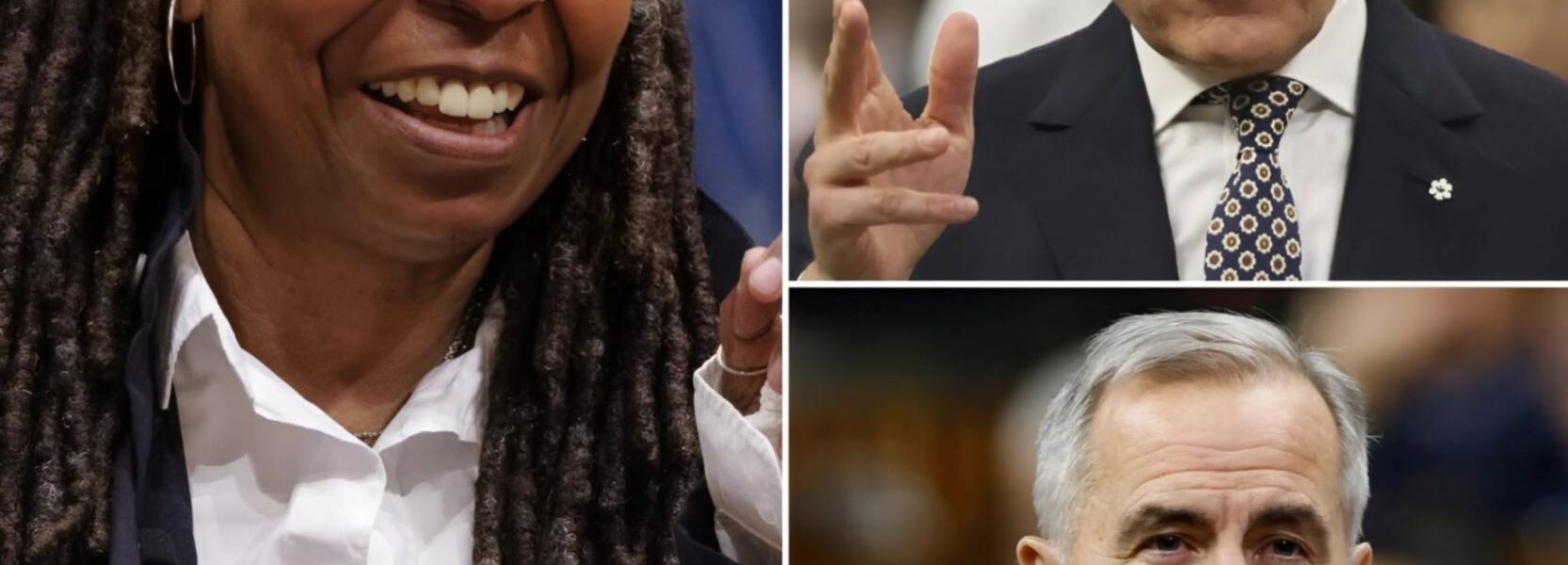

For just a few moments during a live television discussion, a brief exchange involving Whoopi Goldberg and Mark Carney became one of the most talked-about political conversations online. What started as a straightforward opinion quickly evolved into a broader debate about leadership, public trust, and the expectations people place on political figures in an increasingly divided world.
During the discussion, Goldberg spoke positively about Carney, describing him as the kind of leader many people feel has become increasingly rare in modern politics. She highlighted qualities such as calm decision-making, professionalism, and the ability to remain composed during periods of economic and political uncertainty. Rather than focusing on partisan politics, she emphasized the importance of competence and steady leadership, suggesting that these characteristics deserve recognition regardless of political affiliation.
Those comments immediately caught viewers’ attention.
Within minutes of the broadcast, clips of Goldberg’s remarks began circulating across social media platforms. Thousands of users shared the video, while countless others offered their own interpretations. The conversation spread rapidly beyond the show’s regular audience, reaching people in Canada, the United States, Europe, and elsewhere.
Many viewers agreed with Goldberg’s assessment.
Supporters argued that Carney has built a reputation over many years of public service. They pointed to his experience in global finance and economic leadership, saying that he has repeatedly demonstrated the ability to remain calm during difficult situations. For these supporters, Goldberg’s comments reflected what they already believed—that experienced, measured leadership is something many citizens are looking for after years of political polarization.
Some users praised Carney’s communication style, describing it as thoughtful rather than confrontational. Others said that leaders who focus on practical solutions instead of political theater deserve more attention in today’s media environment.
Several commenters even suggested that the discussion represented a growing desire among voters for politicians who prioritize stability over dramatic headlines. According to these supporters, the world has experienced enough uncertainty—from economic challenges to international conflicts—that many people now value predictability and expertise more than flashy campaign promises.
However, not everyone shared that enthusiasm.
Critics responded almost immediately, arguing that no public figure should be elevated to an almost heroic status simply because of favorable media commentary. They cautioned against placing any politician on a pedestal, regardless of qualifications or experience.
Some believed Goldberg’s remarks were overly generous and lacked sufficient balance. Others argued that every political leader, including Carney, should continue to face tough questions and careful scrutiny rather than widespread admiration.
Several commentators stressed that healthy democracies depend on accountability, not celebrity-style popularity. In their view, citizens should evaluate leaders based on policies, results, and transparency instead of personal reputation alone.
The discussion soon evolved into something much larger than Goldberg’s original comments.
Instead of debating only Carney himself, people began asking broader questions about leadership in the modern era.
What qualities truly matter in a national leader?
Is experience more valuable than charisma?
Can someone be respected across political divides, or has polarization made that nearly impossible?
Should media personalities openly endorse political figures, or should they maintain greater neutrality?
These questions fueled thousands of additional conversations online.
Political analysts also joined the discussion, noting that public trust has become one of the defining issues of modern democracy. Around the world, confidence in institutions has fluctuated significantly over the past decade. Against that backdrop, even relatively brief comments from influential television personalities can generate enormous public interest.
Others observed that Goldberg’s remarks may have resonated because many voters are increasingly tired of constant political conflict. Instead of dramatic confrontations, some citizens appear to prefer leaders who project competence, predictability, and professionalism.
At the same time, analysts emphasized that admiration should never replace critical evaluation. Strong democracies require citizens to question leaders respectfully, examine policies carefully, and consider multiple perspectives before forming conclusions.
Another reason the discussion attracted so much attention is the influence of social media itself.
Algorithms often amplify emotionally charged content, meaning that even moderate statements can quickly become highly polarized online. Supporters tend to interpret comments in the most favorable way possible, while critics often view the exact same remarks through an entirely different lens.
As clips continued circulating, some users praised Goldberg for expressing an honest opinion, while others accused her of giving unnecessary political endorsements. The contrast illustrated how the same message can produce dramatically different reactions depending on the audience.
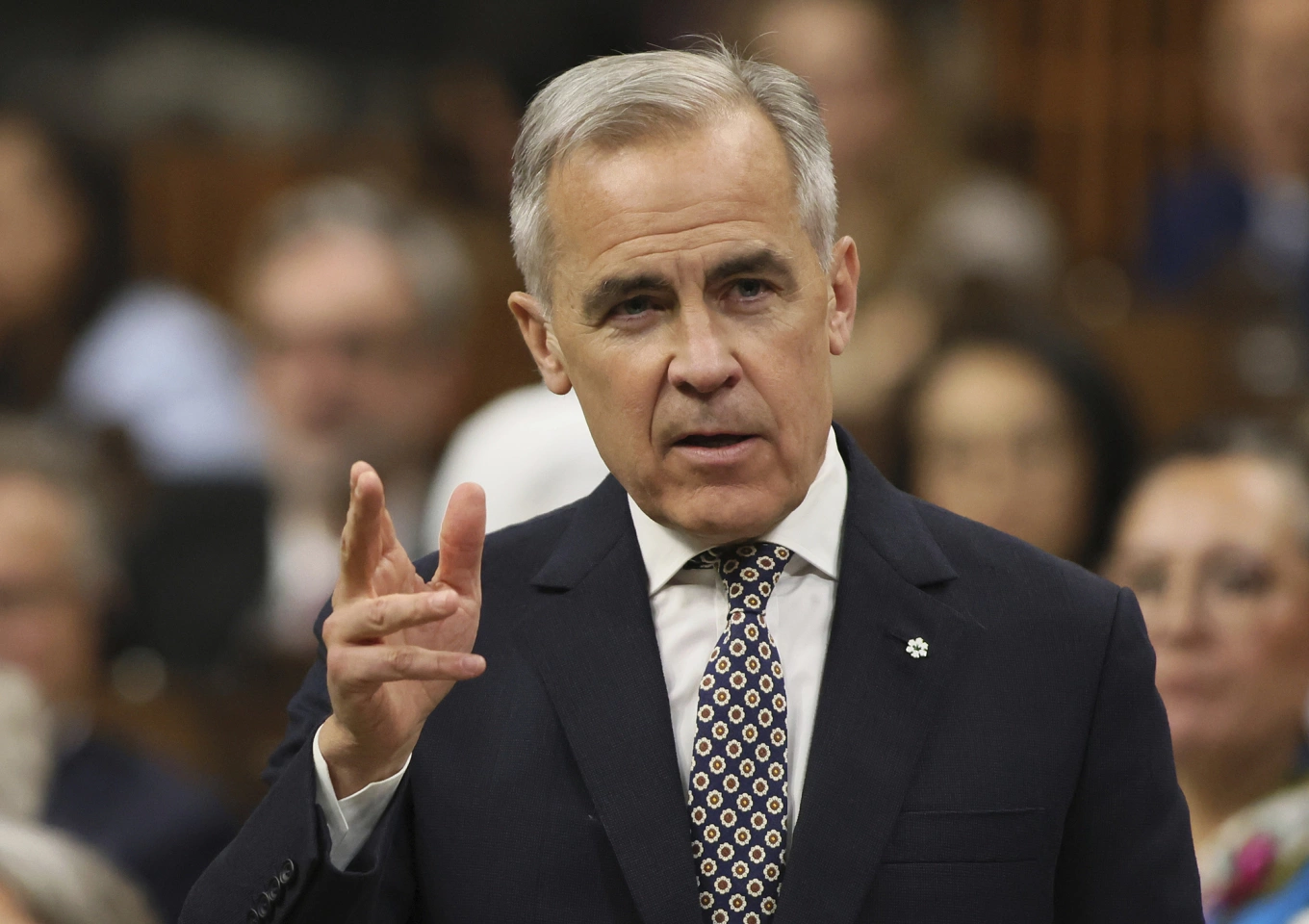
Interestingly, many people who participated in the conversation were not focused solely on Canada.
Instead, they compared Carney’s leadership style with politicians in their own countries. Some suggested that nations around the world are searching for leaders capable of reducing political tension rather than increasing it. Others argued that every country faces unique challenges, making direct comparisons difficult.
The international nature of the debate demonstrated how interconnected modern political conversations have become. A television comment made in one country can quickly become a global topic of discussion within hours.
Meanwhile, many neutral observers encouraged people to move beyond emotional reactions and instead examine Carney’s record, policy positions, and public decisions independently. They argued that thoughtful political engagement requires more than reacting to short video clips or viral headlines.
Whether viewers agreed with Goldberg or disagreed entirely, one point became clear: leadership remains a subject that people care deeply about.
:max_bytes(150000):strip_icc()/Whoopi-Goldberg-The-View-02-050525-27f336d2283f4e6daf64bfb0b1b743e2.jpg)
In times of uncertainty, citizens naturally search for individuals they believe can provide confidence, stability, and effective decision-making. At the same time, democratic societies depend on maintaining healthy skepticism and ensuring that every public official remains accountable.
Perhaps that is why Goldberg’s brief remarks generated such extraordinary attention.
They touched on a much larger conversation—one that extends far beyond any single politician or television program.
It is ultimately a debate about what people expect from those who seek public office, how trust is earned, and whether modern politics can still produce leaders capable of uniting rather than dividing.
As the online discussion continues, opinions remain sharply divided. Some see Mark Carney as an experienced and steady public servant whose leadership qualities deserve recognition. Others believe that any political figure should be judged carefully through actions and policies rather than public praise.