HUNGARY CLOSES ITS BORDERS, BRUSSELS GROWS NERVOUS: INSIDE THE NEW POLITICAL BATTLE THAT COULD RESHAPE THE FUTURE OF THE EUROPEAN UNION

In modern Europe, few political issues generate as much tension as migration, border security, and national sovereignty. Governments rise and fall over the issue. Elections are won and lost because of it. Alliances are formed around it, and divisions deepen because of it. That is why Hungary’s latest decision to tighten border controls and effectively close certain sections of its borders has immediately become far more than a domestic policy announcement.
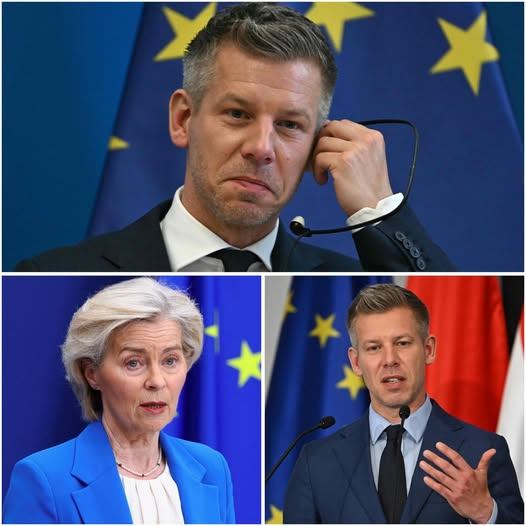
What began as a security measure introduced by the government of Prime Minister Péter Magyar has rapidly evolved into one of the most discussed political developments in Europe. Across television studios, newspaper editorial boards, think tanks, parliamentary chambers, and social media platforms, one question is being asked repeatedly: Is Hungary simply protecting its borders, or is it challenging the very direction of the European Union itself?
The announcement has reignited one of the most sensitive debates within Europe. For years, disagreements over migration policy have divided member states. Countries located on the front lines of migration routes have often argued that they carry a disproportionate burden. Other governments have insisted that humanitarian responsibilities require collective action and burden-sharing among all member states.
Hungary has long been one of the most vocal critics of Brussels’ migration approach. Yet this latest move appears to many observers to represent something larger than previous disputes. It signals that the conflict between national governments and EU institutions may be entering a new and potentially more confrontational phase.
Supporters of the decision argue that Hungary is doing what every sovereign nation has the right to do: protect its borders, maintain public order, and decide who enters its territory. Critics counter that unilateral actions risk undermining European solidarity and could weaken the foundations of cooperation that have held the European project together for decades.
As the debate intensifies, it is becoming increasingly clear that the controversy extends far beyond Hungary itself. The implications reach into the future of Schengen, the authority of Brussels, the balance of power between national capitals and EU institutions, and perhaps even the future identity of Europe.

The Long Shadow of Europe’s Migration Crisis Still Shapes Today’s Politics
To understand why Hungary’s latest actions have generated such a powerful reaction, it is necessary to revisit one of the defining political events of modern Europe: the migration crisis that reshaped the continent during the last decade.
The arrival of large numbers of migrants and asylum seekers exposed deep divisions among European governments. While many leaders emphasized humanitarian obligations, others focused on border security, cultural integration, and the long-term social consequences of large-scale migration.
These competing priorities created political fault lines that never fully disappeared.
For some Europeans, migration became a symbol of compassion, international responsibility, and moral leadership. For others, it became associated with concerns about security, social cohesion, housing shortages, pressure on public services, and the preservation of national identity.
The debate rapidly expanded beyond migration itself.
Questions emerged about who should control national borders.
Questions emerged about whether European institutions possessed too much authority.
Questions emerged about the future of sovereignty within an increasingly integrated European Union.
In many ways, the political battles occurring today are extensions of those earlier debates.
The migration crisis did not simply create policy disagreements.
It transformed the political landscape of Europe.
New political movements emerged.
Traditional parties lost support.
Populist movements gained momentum.
Public trust in institutions was tested.
Many voters began demanding stronger border controls and greater national decision-making authority.
Hungary became one of the most prominent voices representing that perspective.
Its leadership repeatedly argued that protecting external borders was essential not only for national security but also for preserving the integrity of Europe itself.
Supporters viewed this position as pragmatic.
Critics viewed it as unnecessarily confrontational.
The disagreement remains unresolved.
Why Prime Minister Péter Magyar Faces One of the Most Important Tests of His Leadership
The latest border measures arrive at a critical moment for Prime Minister Péter Magyar.
As a relatively new leader operating in an intensely polarized political environment, Magyar faces enormous expectations both domestically and internationally.
Supporters see him as a leader willing to challenge established political orthodoxies.
Critics accuse him of inflaming tensions with Brussels and risking Hungary’s relationship with key European partners.
Whatever perspective one adopts, there is little doubt that his decisions are being closely watched across the continent.
Border policy has become one of the defining issues of his administration.
His government argues that stronger controls are necessary because migration routes continue evolving. Authorities contend that smugglers constantly adapt their methods and that governments must respond proactively rather than reactively.
According to supporters, border security is not simply a matter of immigration policy.
It is a matter of public safety.
It is a matter of state capacity.
It is a matter of preserving confidence in government institutions.
The Magyar administration has consistently emphasized that citizens expect governments to control who enters national territory.
Failure to do so, supporters argue, risks eroding public trust and fueling political instability.
At the same time, the prime minister must navigate a delicate diplomatic landscape.
Hungary remains a member of the European Union.
It benefits economically from membership.
It participates in European institutions.
Its prosperity remains deeply connected to broader European stability.
This means every major policy decision carries consequences beyond national borders.
The challenge facing Magyar is therefore not only how to secure Hungary’s borders but also how to manage the political fallout generated by doing so.
Why Brussels Is Watching the Situation With Increasing Concern
Inside the institutions of the European Union, concerns extend beyond the immediate practical effects of Hungary’s border measures.
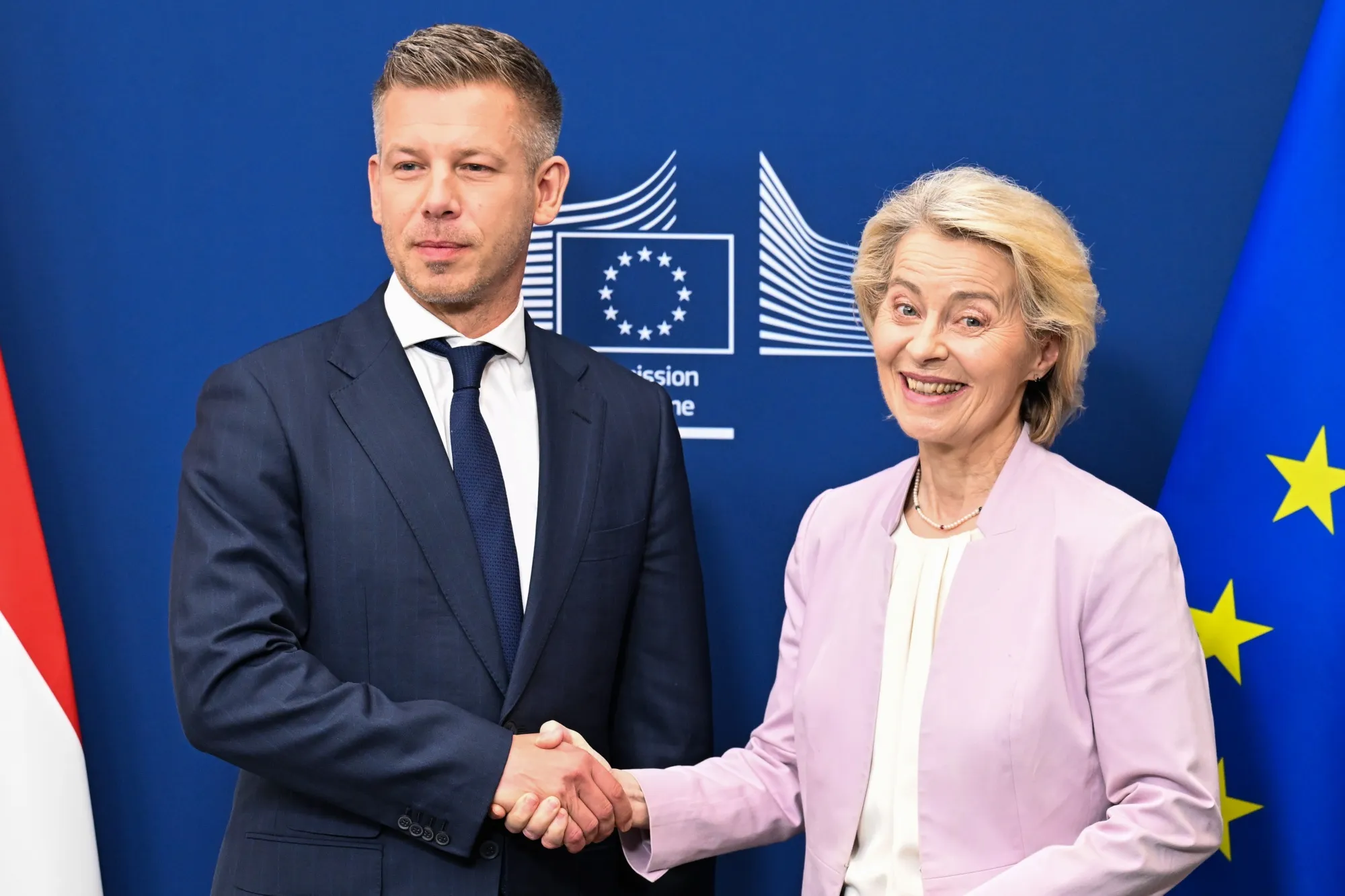
The larger fear involves precedent.
European policymakers understand that political decisions often spread across borders.
One government adopts a controversial policy.
Another government observes public support for that policy.
Soon similar measures begin appearing elsewhere.
This phenomenon has shaped European politics repeatedly over the past decade.
For many officials in Brussels, the concern is not merely whether Hungary tightens its borders.
The concern is whether other countries follow its example.
If multiple member states begin reintroducing stricter controls, the consequences could extend far beyond migration policy.
Such developments could challenge one of the European Union’s most celebrated achievements: freedom of movement.
The Schengen system has long been regarded as a symbol of European integration.
It allows millions of people to travel, work, study, and conduct business across borders with minimal restrictions.
For many Europeans, Schengen represents the practical realization of the European ideal.
The system depends upon trust.
Each member state must trust that external borders are being managed effectively.
Each government must trust that cooperation remains stronger than unilateral action.
When that trust weakens, pressure builds for national solutions.
Brussels fears precisely this dynamic.
If enough governments conclude that national border controls are preferable to collective management, the political foundations supporting Schengen could come under unprecedented strain.
The Schengen Question: Could Europe’s Border-Free Dream Face Its Greatest Challenge Yet?
The possibility of a Schengen crisis has become one of the most frequently discussed aspects of the current controversy.
For decades, Europeans have grown accustomed to crossing borders with remarkable ease.
Students travel abroad for education.
Workers commute across national boundaries.
Tourists move freely between countries.
Businesses rely upon efficient transportation networks.
The border-free environment has become deeply embedded in European daily life.
Yet Schengen has always depended upon political consensus.
It functions effectively only when member states remain committed to common rules and mutual cooperation.
Periods of crisis place that commitment under pressure.
Migration surges, security threats, pandemics, and geopolitical instability have repeatedly tested the system.
Each challenge has raised the same question:
How much national control are governments willing to surrender in exchange for collective benefits?
Hungary’s actions have revived this debate with renewed intensity.
Supporters argue that secure external borders are essential for preserving Schengen.
Without effective enforcement, they contend, public support for open internal borders will inevitably decline.
Critics respond that unilateral measures risk undermining confidence in collective solutions and accelerating fragmentation.
The disagreement highlights a deeper tension within European integration itself.
The European Union seeks to balance national sovereignty with supranational cooperation.
That balance has never been easy.
Migration policy exposes its difficulties more clearly than almost any other issue.
Why Migration Has Become the Defining Political Fault Line of Modern Europe
Economic debates once dominated European politics.
Today, migration often occupies center stage.
The reasons are complex.
Migration touches issues of identity, culture, security, economics, demographics, and national sovereignty simultaneously.
Unlike many policy disputes, it is not easily confined to a single category.
Supporters of stricter controls frequently argue that governments have an obligation to prioritize the interests of existing citizens.
They emphasize border enforcement, integration challenges, housing shortages, and security concerns.
Supporters of more open policies focus on humanitarian responsibilities, labor shortages, demographic decline, and international obligations toward refugees.
Both sides present arguments that resonate with significant portions of the population.
This helps explain why migration remains politically explosive.
It involves competing values rather than simple technical solutions.
The result is a debate capable of reshaping elections, governments, and political alliances.
Hungary’s latest move has become a focal point precisely because it reflects these broader tensions.
The dispute is not solely about fences, checkpoints, or migration routes.
It is about competing visions of Europe’s future.
Is Europe Heading Toward a New Political Realignment?
Perhaps the most intriguing question emerging from the controversy concerns what happens next.
Political analysts increasingly wonder whether Europe is approaching a new period of realignment.
Several governments across the continent face growing domestic pressure to adopt firmer migration policies.
Public opinion in various countries has shifted over recent years.
Concerns regarding border security have become more prominent.
Political parties advocating stricter controls have gained influence in multiple national elections.
Against this backdrop, Hungary’s actions may resonate beyond its borders.
If voters in other countries view the measures as successful, political pressure could grow for similar approaches elsewhere.
Such developments would intensify existing tensions between national governments and European institutions.
Some observers believe Europe is entering a period where sovereignty and integration will increasingly compete for political attention.
Others argue that cooperation remains too economically important for fragmentation to occur on a large scale.
The outcome remains uncertain.
What is clear is that the debate sparked by Hungary’s latest border measures touches some of the most fundamental questions facing Europe today.
Questions about security.
Questions about identity.
Questions about democracy.
Questions about sovereignty.
And questions about whether the European Union can maintain unity while accommodating increasingly divergent national priorities.
As these questions continue unfolding, Hungary’s decision may ultimately be remembered as more than a border policy.
It may be remembered as one of the moments that revealed the growing struggle over what Europe wishes to become in the decades ahead.